
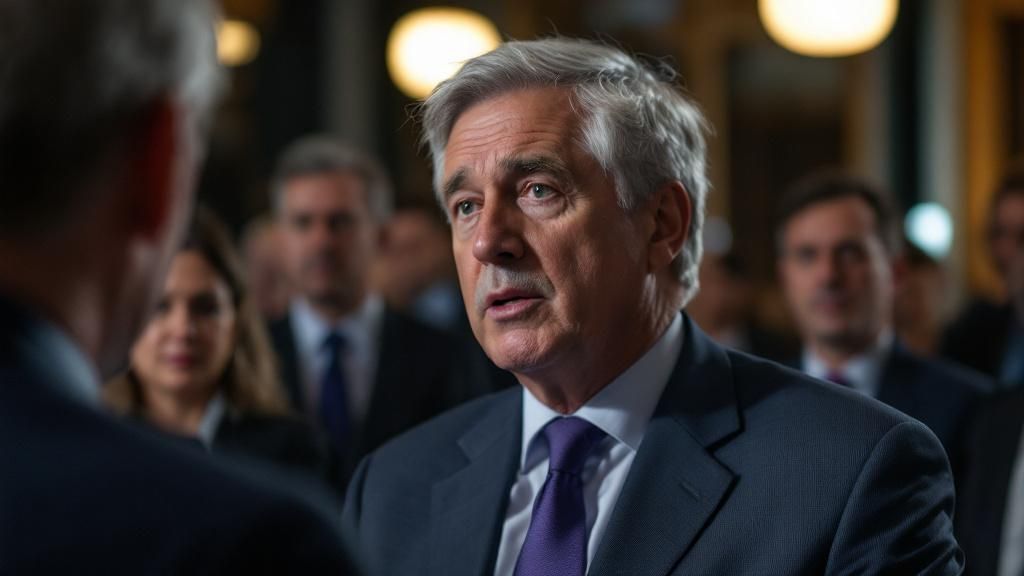
As households across the nation struggle with skyrocketing energy bills and price increases climbing to unprecedented levels, the Labour leader has launched a fierce attack on the Government’s management to the cost of living crisis. In a tense parliamentary confrontation, the Labour party has questioned the administration’s insufficient relief measures, pressing for greater action to help hard-pressed families. This article explores the intensifying tensions surrounding the crisis and investigates the contrasting approaches for economic relief.
The Opposition’s Criticism of Government Policy
The opposition leader has stepped up examination of the government’s handling of the escalating cost of living crisis, arguing that existing policies prove inadequate in addressing the extent of difficulty affecting UK families. During parliamentary exchanges, the opposition has presented a comprehensive critique spanning limited financial aid, limited involvement in energy markets, and a apparent shortage of speed in addressing inflation. The opposition maintains that whilst households grapple with unprecedented bills, the government’s piecemeal approach merely patches symptoms rather than addressing root causes of economic hardship.
Central to the opposition’s argument is the contention that the government has fundamentally misjudged both the severity and duration of the crisis. Opposition officials have pointed to statistical evidence showing that millions of households now endure genuine difficulty, with many compelled to decide between keeping warm and feeding themselves. The opposition contends that the government’s early action did not fully gauge the crisis’s impact, producing relief measures that proved inadequate when circumstances deteriorated further. This error of judgment, they argue, reflects broader failures in economic prediction and policy planning.
Limited Assistance Provisions
The opposition has consistently challenged government support schemes as inadequate and misdirected, arguing that fuel cost controls fail to protect vulnerable populations adequately. Critics point out that whilst the government has established various financial interventions, including grants and council tax rebates, these initiatives offer short-term assistance without resolving structural challenges. The opposition argues that income-assessed support remain too restrictive, shutting out millions of working families who still struggle with mounting expenses. Moreover, they argue the government’s approach lacks the boldness needed to address such an extraordinary financial crisis.
Opposition analysis proposes that existing assistance programmes disproportionately disadvantage those earning mid-range salaries who miss out on access requirements for focused aid. The party has put forward alternative frameworks centred on universal payments, expanded welfare provisions, and direct government intervention in fuel sectors to maintain affordability. They highlight that temporary measures, albeit positive, do not address fundamental systemic change. The opposition argues that in the absence of significant law changes and increased public investment, working people will continue experiencing acute financial strain throughout the foreseeable future.
Long-term Economic Policy Challenges
Beyond immediate crisis management, the opposition has highlighted crucial concerns regarding the state’s long-term economic direction and competitive position. Opposition analysts argue that the present method prioritises short-term political considerations over sustainable economic planning, risking damage to Britain’s long-term prosperity. They contend that without strategic investment in clean energy infrastructure, industrial capacity, and human capital development, the nation risks extended economic stagnation. The opposition stresses that addressing cost of living pressures requires comprehensive reforms addressing productivity, technological innovation, and industry development alongside immediate relief measures.
The opposition has expressed concerns that government policy lacks consistency across different economic domains, with energy policy, industrial strategy, and fiscal measures working independently rather than as unified parts. Critics argue this disjointed strategy hinders resolution of underlying inflationary pressures and deep-rooted economic issues. The opposition advocates for a integrated strategic framework covering energy transition, manufacturing revival, and skills development. They maintain that genuine crisis resolution requires fundamental policy change rather than incremental adjustments to existing frameworks.
Government’s Defence and Counterarguments
The government has robustly defended its fiscal approach, arguing that the affordability pressures are chiefly driven by international forces beyond direct Westminster oversight. Ministers have underscored the unprecedented nature of the energy crisis, stemming from geopolitical tensions and international supply chain disruptions. They contend that their targeted support packages, covering the energy price cap and cost of living payments, represent a measured and fiscally responsible approach. The Finance Ministry maintains that excessive spending could exacerbate inflation even more, damaging long-term financial stability and eventually damaging the very households the opposition purports to support.
Government officials have emphasised the substantial financial assistance previously allocated, totalling billions of pounds in immediate aid to low-income families. They maintain that their policies balance immediate relief with prudent fiscal management, averting the cycle of indebtedness that uncontrolled expenditure could provoke. Ministers also point to their initiatives in boosting energy security through renewable investments and market diversification. The government asserts that whilst the opposition offers sympathetic language, their suggested policies are economically questionable and would create unsustainable outcomes without triggering higher taxes or increased borrowing.
Furthermore, government officials emphasise their commitment to addressing core economic problems through efficiency enhancements and enterprise investment schemes. They argue that sustainable recovery necessitates structural economic reforms rather than short-term payments. The administration holds this strategy ultimately delivers enhanced economic wellbeing and security for every citizen.
